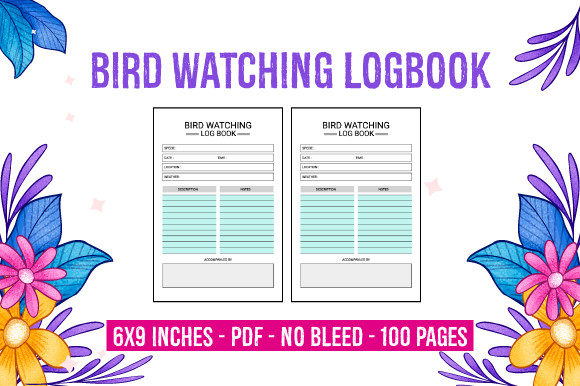
Bird Watching Logbook KDP Interior: Selecting the Right Layout for Quality Publishing
Creating a successful low-content book on Amazon requires more than just uploading a generic template; it demands an understanding of what the end-user actually needs in the field. A Bird Watching Logbook KDP Interior serves as the structural backbone of your publication, determining whether a birder will find your journal useful or frustrating. For publishers and creators targeting the ornithology niche, the difference between a bestseller and a returned product often lies in the specific functionality of the interior pages. When you utilize a ready-to-use PDF file designed specifically for this purpose, you are not just buying pages; you are acquiring a user experience that has been optimized for data collection, sketching, and field notes.
The appeal of a pre-formatted 100-page interior is efficiency, but efficiency should never come at the cost of usability. Many new KDP entrepreneurs make the critical error of assuming that all logbooks are interchangeable. They download the first available file without considering the specific behaviors of bird watchers. A serious birder needs space for weather conditions, GPS coordinates, species identification markers, and behavioral notes. If your chosen Bird Watching Logbook KDP Interior lacks these specific fields, or if the lines are too faint to read in outdoor lighting, the book fails its primary function. Before you add a cover and hit publish, it is essential to evaluate the interior through the lens of practical application rather than just aesthetic minimalism.
Evaluating Page Functionality Over Generic Design
One of the most frequent oversights in the low-content publishing space is prioritizing visual density over writing utility. When reviewing a potential interior file, look closely at the input fields. Are they large enough for handwriting? Birders often write while standing, wearing gloves, or using binoculars with one hand. Cramped, tiny text boxes that look neat on a computer screen become illegible scribbles in a physical notebook. A high-quality interior provides ample white space and clearly defined sections that guide the user without restricting them.
Furthermore, consider the paper quality implications of your design. Since KDP standard color paper is 55# (90 GSM), heavy ink coverage can lead to bleed-through issues even if the file is technically labeled "no bleed." Avoid interiors with solid black backgrounds or heavy graphical elements that consume excessive ink. The best Bird Watching Logbook KDP Interior files use clean, crisp lines and minimalist iconography. This ensures the content remains legible regardless of lighting conditions and prevents the user from having to worry about their pen marks ruining the next page. Always preview the PDF at 100% zoom to verify that line weights are substantial enough to print clearly but light enough to write over comfortably.
Understanding Trim Size and Safe Zone Constraints
Technical specifications are where many promising projects fail. The standard 6″ x 9″ dimension is ideal for field journals because it balances portability with sufficient writing area. However, simply selecting a 6x9 PDF is not enough. You must understand the relationship between trim size, margins, and the gutter. A common mistake is using an interior file where the binding margin is too narrow. When a 100-page book is bound, the inner gutter consumes significant space. If the log entries extend too close to the spine, the user has to break the binding to write in them, which damages the book and creates a poor customer experience.
Always verify that the ready-to-use PDF includes appropriate safety margins. For a 6″ x 9″ book with 100 pages, the inside margin should generally be at least 0.375 inches, though 0.5 inches is often safer for logbooks that require extensive note-taking near the binding. Additionally, confirm whether the file is set up for bleed or no bleed. Most birding journals do not require bleed unless the design elements extend to the very edge of the paper. Uploading a no-bleed file into a bleed-enabled project setting (or vice versa) can result in rejected uploads or shifted content. Double-check the file properties against KDP’s current printing specifications before finalizing your listing.
Avoiding Resolution and Formatting Pitfalls
Blurry interiors are the fastest way to accumulate negative reviews. While the product description may state "High-Resolution PDF Files," it is your responsibility to validate this claim. Low-resolution vectors or rasterized images that have been upscaled will appear pixelated or jagged when printed. Open the file and zoom in to 200% or 300%. Text edges should remain sharp, and lines should be smooth. If you see artifacts or fuzziness, do not use the file. Print quality directly correlates to perceived value, and in the competitive nature journaling market, professional presentation is non-negotiable.
Another subtle issue involves page count alignment. A 100-page interior is a specific configuration. Ensure your cover design accounts for exactly 100 pages. Using a cover template calculated for 102 or 98 pages will cause misalignment during printing. Additionally, check for blank pages at the beginning or end of the PDF. Some ready-to-use files include extra buffer pages that you may need to remove or account for to maintain the correct total page count. Consistency between your metadata, cover spine width, and interior file is crucial for a seamless publishing process.
Strategic Differentiation in a Saturated Niche
Because ready-to-use files are accessible to everyone, differentiation becomes challenging. To avoid publishing a clone of existing products, treat the PDF as a foundation rather than a final product. Consider adding unique value propositions that generic templates lack. This might involve including a regional checklist appendix, a glossary of birding terms, or conversion charts for metric measurements. Even small modifications can transform a standard Bird Watching Logbook KDP Interior into a specialized tool for a specific audience segment, such as backyard birders versus migratory trackers.
Transparency in your marketing also builds trust. Clearly describe what is included in the 6″ x 9″ format. Specify the number of logging pages versus reference pages. If the interior includes specific features like moon phase tracking or habitat categorization, highlight these details. Customers appreciate knowing exactly what they are purchasing. Avoid vague descriptions that promise "everything a birder needs" without proof. Instead, showcase interior spreads in your listing images so buyers can assess the layout's suitability for their personal recording style. This reduces returns and increases satisfaction by aligning expectations with reality.
Making Informed Decisions Before Publishing
Before you commit to a specific digital file, conduct a thorough audit. Download the sample or full file and print a few test pages on your home printer. Hold them in your hand. Write in them with different types of pens commonly used by birders, such as ballpoints, gel pens, and pencils. Ask yourself if the flow makes sense. Is there enough room for a quick sketch next to the species name? Does the date field accommodate various formats? This tactile testing phase is invaluable and takes less than thirty minutes, yet it saves weeks of potential post-launch troubleshooting.
Ultimately, the goal is to provide a resource that enhances the bird watching experience. By approaching the selection of a Bird Watching Logbook KDP Interior with a critical, user-focused mindset, you move beyond simple content aggregation to true product creation. Verify dimensions, test resolution, respect margins, and prioritize functionality. When you combine a high-quality, well-vetted interior with a compelling cover and accurate metadata, you create a product that stands out for its utility and craftsmanship. This attention to detail is what separates sustainable KDP businesses from fleeting trends, ensuring your journal becomes a trusted companion for nature enthusiasts in the field.