Evaluating the Weather Log Book KDP Interior for Low-Content Publishing
For self-publishers and print-on-demand entrepreneurs, the efficiency of asset acquisition often dictates profitability. The Weather Log Book KDP Interior represents a specific category of functional digital assets designed to streamline the creation of niche journals. Unlike generic lined notebooks, weather logs require structured data entry fields, making them more complex to design from scratch. This ready-to-use PDF resource targets creators who want to bypass the layout phase and move directly to cover design and publication. Understanding the practical utility, technical specifications, and market fit of this 100-page interior is essential for determining whether it aligns with a professional publishing workflow or a hobbyist’s portfolio expansion.
Technical Specifications and Print Readiness
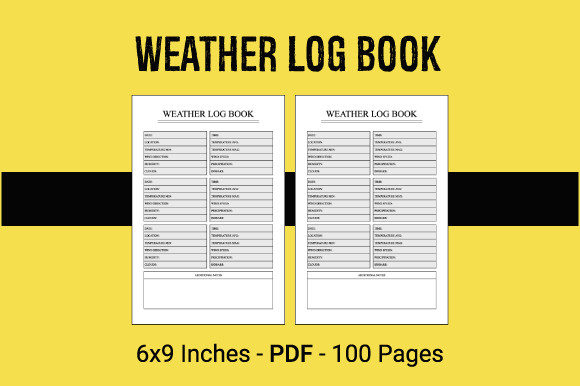
The foundational value of any KDP interior lies in its technical compliance with Amazon’s printing standards. This Weather Log Book KDP Interior is formatted at 6″ x 9″ inches, which is arguably the most versatile trim size for functional journals. It strikes a balance between portability and writing space, making it suitable for field use by gardeners, hikers, or meteorology students without being cumbersome. The 100-page count is a strategic choice; it provides substantial utility for several months of daily logging while keeping the spine width sufficient for legible text and maintaining a competitive printing cost. Thicker books increase production costs and retail prices, potentially reducing margins in a competitive low-content niche.
A critical distinction in this package is the "No Bleed" specification. For weather tracking journals, no bleed is generally the superior choice. Data tables, temperature graphs, and observation notes typically require clear margins to ensure readability and prevent information from being lost in the gutter or trimmed during binding. While full-bleed interiors offer aesthetic immersion, they also carry higher rejection risks during the KDP upload process if margins are miscalculated. By utilizing a no-bleed format, this interior prioritizes safety and consistency over decorative flair, which is appropriate for a utilitarian reference tool. The high-resolution PDF files ensure that lines and text remain crisp after printing, avoiding the fuzzy or pixelated appearance that plagues amateur templates.
Functional Design and User Experience
The effectiveness of a weather log depends entirely on the usability of its interior pages. A successful Weather Log Book KDP Interior must anticipate the user's data entry needs. When evaluating this asset, one should look for logical organization rather than mere repetition. Practical layouts typically include dedicated sections for date, time, temperature (high/low), barometric pressure, wind speed and direction, precipitation type and amount, cloud cover, and general observations. Space for sunrise and sunset times is also valuable for users correlating weather patterns with daylight hours.
Beyond daily entries, high-value interiors often include supplementary reference pages. These might feature conversion charts (Celsius to Fahrenheit, inches to millimeters), Beaufort wind scale guides, or cloud identification diagrams. These additions transform a simple notebook into a comprehensive field guide, increasing the perceived value for the end customer. If the 100 pages consist solely of identical grid tables without contextual aids, the product may feel incomplete. However, if the interior balances repetitive logging space with educational or reference material, it serves a broader audience ranging from casual enthusiasts to semi-professional observers.
Consistency in line weight and font sizing is another marker of quality. Inconsistent spacing makes handwriting difficult and creates visual fatigue. Professional-grade interiors maintain uniform margins and alignment throughout the entire document. This attention to detail signals to the buyer that the publisher cares about the user experience, which directly influences reviews and long-term sales velocity.
Strategic Fit for Publishers and Creators
This type of digital asset serves distinct segments within the KDP ecosystem. For established publishers managing large portfolios, the primary benefit is time compression. Designing a technically accurate, aesthetically pleasing weather log from scratch can take 10 to 20 hours when accounting for research, layout, testing, and proofing. Acquiring a pre-made Weather Log Book KDP Interior reduces this timeline to minutes, allowing the creator to focus on keyword research, cover design, and marketing—activities that drive visibility more directly than interior tweaking.
For educators and small business owners, these interiors offer branding opportunities. A gardening coach could publish a customized weather and planting journal as a lead magnet or course supplement. A homeschooling educator might use it as a science curriculum resource. Because the interior is neutral and functional, it adapts easily to various niches without requiring extensive modification. Freelancers and virtual assistants managing publishing accounts for clients also benefit from having reliable, pre-vetted assets that reduce client revision cycles.
However, serious hobbyists and professionals should approach pre-made interiors with discernment. If your target audience requires specialized metrics—such as soil moisture levels for viticulturists or swell height for surfers—a generic weather log may not suffice. In such cases, this asset serves better as a structural foundation or inspiration rather than a final product. Understanding the gap between a generalist template and a specialist need is crucial for avoiding negative feedback from knowledgeable buyers.
Quality Assessment and Limitations
While ready-to-use PDFs offer convenience, they come with inherent trade-offs. The most significant limitation is lack of exclusivity. Multiple publishers may purchase and use the same Weather Log Book KDP Interior, leading to duplicate content issues on Amazon. To mitigate this, creators must differentiate their products through unique covers, titles, subtitles, and backend keywords. The interior is merely the canvas; the market positioning comes from the wrapper. Relying solely on the interior without adding unique metadata or branding is a recipe for obscurity.
Another consideration is customization flexibility. PDF files are generally static. If you wish to add a personalized introduction, modify column headers, or adjust margin widths, you cannot edit the PDF directly without specialized software or recreating the layout. Creators who anticipate needing frequent variations should verify whether source files are included or if the PDF meets their needs as-is. For those comfortable with the standard layout, this limitation is irrelevant; for others, it may necessitate additional investment in editable templates.
Quality control remains the publisher's responsibility regardless of the asset's origin. Always order a physical proof before listing. Screen resolution does not always translate accurately to print, and paper opacity varies between KDP’s standard and premium options. A weather log with heavy ink coverage on thin paper may cause bleed-through, rendering the reverse side unusable. Testing ensures the chosen interior performs well with the intended paper stock and prevents costly post-launch corrections.
Maximizing Value Through Presentation
The commercial success of a weather journal hinges on how effectively the interior’s features are communicated to potential buyers. Since customers cannot flip through a physical book online, the publisher must bridge the information gap. Create mockups that display actual interior spreads, highlighting specific data fields and reference pages. Use A+ Content to showcase the layout’s functionality and explain how it supports weather tracking goals. Descriptions should detail exactly what is tracked, the page count, and any bonus features like conversion charts.
Pricing strategy should reflect the interior’s depth. A basic 100-page log might command a lower price point than one enriched with educational content. Analyze competitors in the weather journal niche to identify pricing sweet spots. If this Weather Log Book KDP Interior includes premium features, justify a higher price through enhanced presentation and clearer value propositions. Conversely, if it is a minimalist tracker, position it as an affordable, no-frills option for bulk buyers or beginners.
Ultimately, this resource functions best as a component of a broader publishing strategy rather than a standalone solution. Its worth is determined by how well it integrates with your cover design, keyword targeting, and audience understanding. For creators seeking to expand into functional journals without significant design overhead, it offers a pragmatic starting point. Success requires treating the interior as a foundation to build upon, not a finished product to passively list. By combining technical readiness with thoughtful marketing and quality assurance, publishers can leverage this asset to create genuinely useful tools that serve both their business objectives and their customers’ needs.