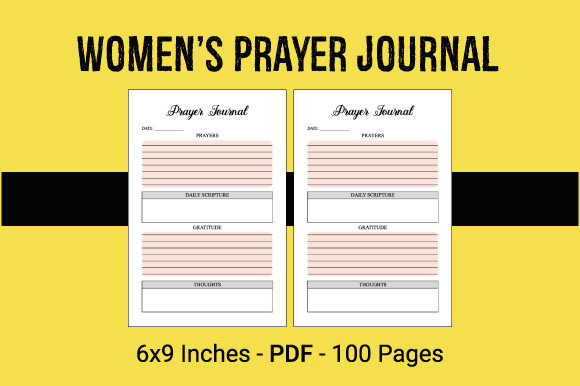
Women's Prayer Journal: Ready-to-Use KDP Interior
Launching a successful low-content book business on Amazon KDP often hinges on finding the right balance between niche specificity and production efficiency. For publishers targeting the faith-based market, a high-quality Women’s Prayer Journal interior serves as an excellent foundation. This digital asset eliminates the most time-consuming phase of book creation—interior design—allowing you to focus entirely on cover aesthetics, keyword research, and marketing strategy. By utilizing a pre-formatted, 100-page PDF template, creators can move from concept to published product in a fraction of the time it would take to design from scratch.
The demand for spiritual wellness tools remains consistently strong among adult women aged 20 to 50. This demographic frequently seeks structured methods for reflection, gratitude, and scripture study. A well-designed interior addresses this need directly, providing a functional space for daily practice rather than just blank lines. When you offer a product that solves a specific organizational problem for this audience, you increase the perceived value of your book and improve its chances of converting browsers into buyers.
Technical Specifications for Seamless Publishing
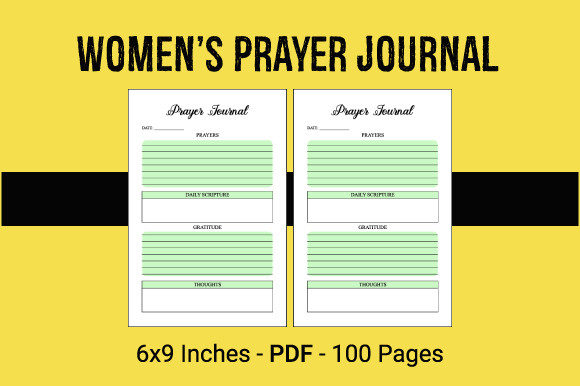
Understanding the technical parameters of your source files is critical for avoiding common KDP rejection errors. This Women’s Prayer Journal template is engineered specifically for the 6″ x 9″ trim size, which is currently the industry standard for personal journals and devotionals. This dimension offers enough writing space for meaningful entry while remaining portable enough for purse or bag carry. The portability factor is a significant selling point for busy professionals and mothers who integrate prayer into fragmented daily schedules.
The file package includes high-resolution PDF interiors formatted with no bleed settings. For new publishers, "no bleed" means all content stays within the safe margin zone, ensuring that no text or decorative elements are trimmed off during the physical printing process. This safety margin reduces anxiety during the proofing stage and minimizes the risk of having to reformat after a failed upload. The 100-page count is another strategic choice; it provides substantial value without pushing the spine width into a category that requires more complex cover calculations or significantly higher printing costs.
What Is Included in the Digital Asset
- Dimensions: Standard 6″ x 9″ inches optimized for trade paperback printing.
- Page Count: 100 pages of unique, structured interior layouts.
- Bleed Settings: No bleed configuration for safer margin alignment.
- File Format: High-resolution PDF ready for direct KDP upload.
- Content Type: Specialized prompts and sections tailored for women’s spiritual growth.
Strategic Applications for POD Entrepreneurs
For freelancers and agency owners managing multiple KDP accounts, speed and consistency are paramount. Using a standardized Women’s Prayer Journal interior allows for rapid portfolio expansion. Instead of spending forty hours designing a single interior, you can allocate that time to creating five distinct covers that target different sub-niches within the faith community. One cover might appeal to new mothers, another to corporate professionals seeking mindfulness, and a third to retirees exploring deeper theological study. The interior remains constant, but the branding adapts to capture diverse segments of the same market.
Educators and ministry leaders also find practical utility in these ready-to-use files. Small group leaders often require uniform materials for Bible studies or retreats but lack the budget for custom printing or the skills for professional layout. Purchasing a commercial-use license for this type of interior enables them to publish affordable, branded resources for their congregations or students. In this context, the journal becomes a tool for community building rather than just a retail product. The structured pages facilitate guided discussion and personal application, enhancing the overall educational experience.
Evaluating Quality Before Publication
Not all low-content interiors are created equal, and discernment is necessary when selecting assets for your business. Before publishing any Women’s Prayer Journal, review the interior flow critically. Does the progression make sense? Are the prompts open-ended enough to encourage deep reflection but structured enough to prevent writer’s block? Check the line spacing and font choices; cramped text discourages handwriting, while excessive whitespace can feel wasteful. The best interiors strike a balance between aesthetic beauty and functional usability.
Verify the resolution of any graphical elements included in the PDF. Blurry borders or pixelated icons will result in poor customer reviews, which can permanently damage a listing’s ranking. Since this asset is provided as a high-resolution PDF, it should meet the 300 DPI standard required for crisp print quality. Always order a physical proof copy before launching. Seeing the ink density and paper texture in person reveals issues that screen previews cannot show. This step is non-negotiable for maintaining professional standards in a saturated marketplace.
Enhancing User Experience Through Design
The success of a faith-based journal depends heavily on how the user interacts with the pages. A generic lined notebook does not compete with a specialized Women’s Prayer Journal because it lacks intentionality. Effective interiors include dedicated sections for scripture reference, gratitude lists, prayer requests, and reflective notes. These structural cues guide the user through a holistic spiritual practice. When customers recognize that the interior was designed with their specific needs in mind, they are more likely to leave positive feedback and recommend the book to peers.
Consider the cognitive load of your target audience. Many women in the 20–50 age bracket are juggling careers, parenting, and household management. Their journaling time is often limited and precious. An intuitive layout that allows them to start writing immediately without deciphering complex instructions adds tangible value. Simplicity in design translates to ease of use. Avoid cluttering pages with excessive ornamentation that distracts from the core purpose of reflection. White space is not empty space; it is breathing room for thought.
Commercial Considerations and Licensing
When integrating ready-made interiors into your business model, always clarify the licensing terms. Ensure you have the rights to use the Women’s Prayer Journal files for commercial publication on platforms like Amazon KDP. Some licenses restrict the number of units sold or require attribution, while others grant unlimited commercial use. Understanding these boundaries protects your business from legal complications and platform bans. Keep records of your purchase and license agreement in case Amazon requests verification of your content ownership.
Differentiation is key when using shared assets. Since other publishers may have access to the same 100-page template, your competitive advantage lies in the cover design, title optimization, and book description. Do not rely solely on the interior to drive sales. Invest in professional cover art that signals quality and relevance. Write descriptions that highlight the specific benefits of the journal structure, mentioning features like "guided reflection prompts" or "daily gratitude tracking." Your marketing copy should bridge the gap between the generic interior file and the specific emotional or spiritual outcome the reader desires.
Ultimately, this digital resource represents a leverage point for creators. It transforms the labor-intensive process of book manufacturing into a streamlined workflow. Whether you are a solo entrepreneur testing a new niche or an established publisher scaling your faith-based catalog, a professionally formatted Women’s Prayer Journal interior provides the structural integrity needed for a viable product. By combining this solid foundation with thoughtful branding and ethical publishing practices, you can build a sustainable business that serves both your financial goals and the genuine needs of your readership.