Cash Flow Logbook: Ready-to-Use KDP Interiors
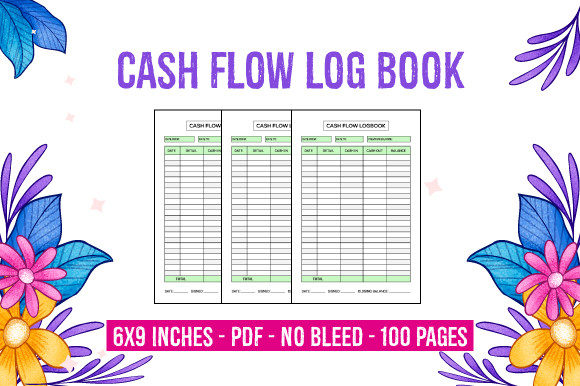
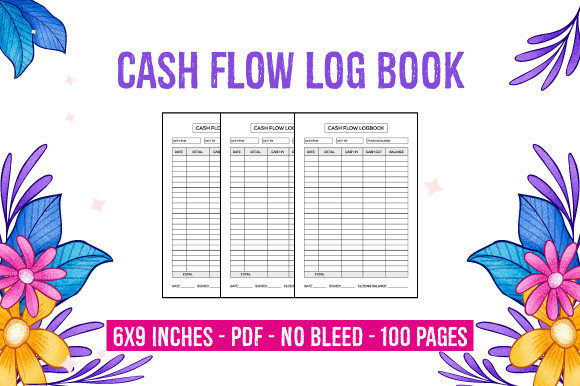
Launching a low-content publishing business on Amazon KDP often stalls at the interior design phase. While creating a cover captures the creative energy, formatting a functional, professional-grade ledger requires meticulous attention to detail that many publishers would rather outsource or automate. This Cash Flow Logbook template solves that specific bottleneck by providing a pre-formatted, 100-page interior designed specifically for financial tracking. It is not merely a collection of blank lines; it is a structured tool ready for immediate upload, allowing you to focus your efforts on niche research, keyword optimization, and cover design rather than wrestling with margin settings and bleed specifications.
The visual character of this logbook leans heavily into utilitarian modern typography. In the context of no and low content books, the "font" is effectively the layout itself. The typeface choices here prioritize high legibility and data entry speed over decorative flair. We utilize a clean sans serif font for headers and column labels to ensure that users can scan the page quickly without visual fatigue. This functional aesthetic signals professionalism and reliability, two traits essential for any financial stationery product. When a customer looks at the preview pages on Amazon, they are assessing whether the book will actually help them organize their finances. A cluttered or overly stylized interior suggests a novelty item, whereas this crisp, grid-aligned layout communicates a serious business tool.
Functional Design and Visual Hierarchy
Effective editorial design for logbooks relies entirely on visual hierarchy. The user’s eye needs to travel naturally from the date field to the description, then to the income/expense columns, and finally to the running balance. This Cash Flow Logbook achieves that flow through deliberate spacing and line weight variation. Heavier strokes define the primary writing areas, while lighter rules separate metadata fields. This subtle manipulation of modern typography principles ensures the page feels open and inviting rather than cramped, even with 100 pages of repetitive structure.
Readability in this context also extends to the physical act of writing. The line height has been calibrated for standard ballpoint and gel pens, preventing cramping while maximizing usable space per page. For publishers, understanding these micro-decisions is vital. You aren't just selling a PDF; you are selling a user experience. If the font size is too small or the contrast too low, negative reviews will follow regardless of how beautiful your cover is. This template adheres to industry standards for commercial font usage in stationery, ensuring that the text remains sharp and clear after the printing process, which can sometimes soften fine details.
Technical Specifications for Seamless Publishing
One of the most common rejection reasons on KDP involves incorrect trim sizes or bleed settings. This digital asset eliminates that risk by strictly adhering to the 6″ x 9″ industry standard. This dimension is the sweet spot for financial logbooks—large enough to accommodate detailed transaction notes yet compact enough to fit in a briefcase or desk drawer. The file is provided as a high-resolution PDF, the only format accepted for professional print production. Rasterized images or low-DPI files result in pixelated text that destroys brand perception instantly. This vector-based output guarantees crisp edges at any zoom level.
- Dimensions: Precise 6″ x 9″ trim size optimized for trade paperback distribution.
- Page Count: 100 pages of consistent interior layouts, meeting minimum thickness requirements for spine text.
- Bleed Configuration: Set to No Bleed, keeping all content safely within margins to prevent trimming errors.
- File Format: Print-ready high-resolution PDF suitable for direct KDP upload.
The "No Bleed" specification is particularly important for this type of interior. Financial logbooks typically require ample white space around the perimeter for binding clearance and thumb placement. By keeping all elements within the safe zone, you avoid the risk of critical column headers being guillotined during manufacturing. This conservative approach to layout design reflects an understanding of print-on-demand limitations, saving you from costly proofing cycles and delayed launch dates.
Strategic Applications Across Niches
While labeled a Cash Flow Logbook, the versatility of this interior allows for adaptation across multiple profitable niches. The neutral, professional styling makes it appropriate for diverse audiences ranging from freelance creatives to small business owners. For entrepreneurs and marketers, this serves as a dedicated expense tracker for tax season. For crafters and hobbyists selling on Etsy, it functions as a simplified profit and loss journal. The lack of branded terminology within the interior means you can position the same core asset toward different customer avatars simply by changing the cover design and title metadata.
This adaptability is where the value of premium font and layout assets becomes apparent. Instead of designing five different interiors for five sub-niches, you leverage one robust master template. The clean sans serif typography acts as a chameleon, pairing equally well with a minimalist corporate cover or a rustic, handmade aesthetic. When evaluating project fit, consider the end-user's environment. Is this book being used at a construction site, a home office, or a retail counter? The high-contrast, no-nonsense design of this logbook performs reliably in all these lighting conditions and contexts, unlike script fonts or ornate display fonts that might sacrifice utility for style.
Evaluating Quality and Commercial Viability
Before adding any digital asset to your publishing portfolio, rigorous testing is non-negotiable. Even with a ready-to-use file, you should always order a physical proof or use the KDP previewer extensively. Check the alignment of the columns against the gutter margin; as the book fills up, the curve of the paper can make inner-margin text difficult to read. This template accounts for that curvature, but verifying it for your specific paper stock choice (white vs. cream) is a best practice. Cream paper absorbs more ink and can reduce contrast, so ensure the line weights remain distinct.
From a licensing perspective, always verify the commercial rights associated with your design assets. This Cash Flow Logbook is intended for commercial publication, meaning you can sell unlimited copies without royalty payments to the template creator. However, you cannot resell the PDF file itself as a standalone digital product. Understanding this distinction protects your account and respects intellectual property norms. Furthermore, while the interior is ready-made, success still depends on your unique value proposition. Use this template as a foundation, but differentiate your listing through superior keyword research, compelling A+ content, and a cover that stops the scroll.
Ultimately, the goal of using pre-made interiors like this Cash Flow Logbook is to streamline production without sacrificing quality. It allows designers, publishers, and side-hustlers to maintain a consistent release schedule while ensuring every product meets professional standards. By focusing on readability, proper technical specs, and niche versatility, you transform a simple PDF into a sustainable income stream. The typography and layout do the heavy lifting of usability, leaving you free to build a recognizable brand identity in the competitive low-content market.