Optimizing KDP Interiors: A Guide to the Coffee Roasting Log Book and Ready-to-Use PDF Assets
The landscape of Amazon Kindle Direct Publishing (KDP) has shifted significantly from simple lined journals to specialized, functional tools that serve specific niches. Among these high-value assets is the KDP Interior - Coffee Roasting Log Book, a targeted resource designed for both hobbyist roasters and small-batch commercial operations. For publishers and creators utilizing Print on Demand (POD) models, understanding the technical specifications and market utility of such interiors is essential for creating products that sell based on merit rather than novelty. This guide explores the practical application, technical composition, and strategic implementation of ready-to-use PDF files specifically tailored for coffee roasting documentation.
The Functional Necessity of Specialized Roasting Logs
Coffee roasting is a discipline governed by chemistry, thermodynamics, and sensory analysis. Unlike generic notebooks, a dedicated roasting log serves as a critical data collection instrument. When evaluating or designing a KDP Interior - Coffee Roasting Log Book, one must understand what professional and amateur roasters actually track during a session. The value proposition of this interior lies in its ability to standardize variable data points into a consistent format.
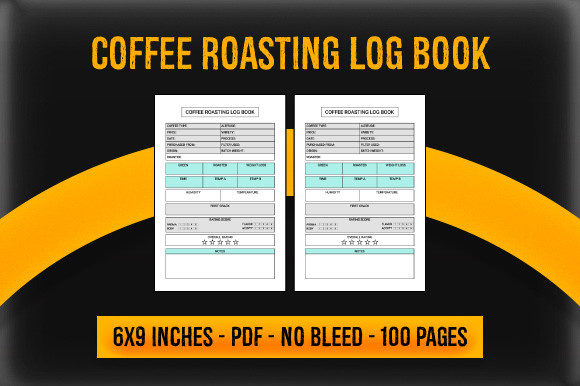
Effective roasting logs capture three distinct phases of the process. First, green bean metrics including origin, processing method, moisture content, and density provide the baseline for thermal application. Second, the roast profile itself requires tracking charge temperature, turning point, first crack timing and temperature, development time ratio, and drop temperature. Third, post-roast evaluation involves cupping scores, weight loss percentage calculations, and sensory notes regarding acidity, body, and flavor clarity. A 100-page interior optimized for this workflow allows users to maintain longitudinal records, identifying trends across different bean lots or equipment adjustments over time.
Technical Specifications for Print on Demand Compliance
Acquiring or creating ready-to-use PDF files requires strict adherence to manufacturing standards. The specified dimensions of 6″ x 9″ represent an industry sweet spot for functional logbooks. This trim size offers sufficient surface area for detailed tabular data while remaining portable enough for use in active roasting environments where space is often limited. Publishers must verify that the digital asset matches this exact trim size to prevent rejection during the KDP upload process.
Resolution is non-negotiable in technical interiors. High-resolution PDF files ensure that grid lines, text fields, and instructional headers remain crisp after printing. Low-content books with blurry text or pixelated tables are frequently returned by customers, damaging seller metrics. The files should be embedded with proper fonts or outlined to prevent substitution errors across different operating systems. Furthermore, the distinction between bleed and no-bleed configurations dictates margin safety zones. A no-bleed 6x9 interior typically requires a minimum inner margin of 0.375 inches and outer margins of 0.25 inches to account for binding shift and trimming variance. Ready-to-use assets labeled as "no bleed" must have all content contained well within these safe zones to ensure no critical logging fields are lost in the gutter.
Evaluating Page Layout Efficiency
A 100-page count provides substantial utility without making the book unwieldy. However, page count alone does not determine quality; layout density matters more. In a coffee roasting context, each spread should ideally function as a complete record for a single batch or a comparative set of batches. Efficient layouts minimize wasted whitespace while avoiding clutter that makes handwriting difficult in low-light roasting conditions. Publishers should assess whether the provided PDF includes adequate writing space for qualitative notes alongside quantitative checkboxes. The best interiors balance structured data entry with open areas for sketching flame curves or noting equipment anomalies.
Streamlining the Publishing Workflow with Pre-Made Assets
For POD business owners, time-to-market is a significant factor. Developing a technically accurate coffee roasting log from scratch requires either subject matter expertise or extensive research and design iteration. Utilizing a pre-formatted KDP Interior - Coffee Roasting Log Book eliminates the design phase entirely, allowing creators to focus on cover design, keyword research, and marketing strategy. These ready-to-use PDF files serve as a foundation upon which a unique brand identity can be built.
The integration process is straightforward but demands attention to detail. Upon receiving the high-resolution PDF, publishers should perform a test print or utilize KDP’s previewer tool to validate margins and readability. Even professionally designed assets can sometimes interact unexpectedly with specific printer settings. Verifying the file before publishing ensures that the 100 pages render correctly and that the no-bleed parameters align with Amazon’s current printing specifications. This validation step protects the publisher’s reputation and reduces customer service inquiries regarding formatting defects.
Differentiation Through Cover Design and Metadata
Since multiple sellers may utilize similar ready-to-use interiors, competitive advantage stems from external presentation and discoverability. The instruction to "just add a cover and publish" refers to the mechanical ease of assembly, not the marketing strategy. Successful publishers pair functional interiors with covers that signal professionalism and niche relevance. Matte finishes often perform better for utilitarian logbooks as they resist fingerprints and glare in workshop environments. Typography should be legible at thumbnail size, clearly communicating that the book is specifically for coffee roasting rather than general journaling.
Metadata optimization must reflect the interior’s actual capabilities. Descriptions should highlight specific features included in the 100-page layout, such as cupping score sections or moisture tracking fields. This transparency helps potential buyers confirm the book meets their specific documentation needs. Keywords should target long-tail search phrases like "specialty coffee roasting notebook," "home roaster log template," or "commercial batch record keeper" rather than broad terms that attract unqualified traffic.
User Experience Considerations for Diverse Audiences
The audience for coffee roasting logs spans multiple segments, each with distinct requirements. Home enthusiasts often prioritize educational scaffolding and space for learning notes, while commercial roasters need streamlined efficiency and compliance-friendly record keeping. A versatile KDP Interior - Coffee Roasting Log Book accommodates this spectrum through thoughtful design choices. Tables should include units of measurement relevant to both metric and imperial users, or provide conversion references. Temperature scales should accommodate Celsius and Fahrenheit preferences common in different roasting communities.
Durability considerations also influence user satisfaction. While publishers cannot control paper stock directly through KDP, they can optimize the interior for the available options. Cream paper is generally preferred for logbooks as it reduces eye strain under bright roasting lights and shows less bleed-through from gel pens or markers compared to white paper. Designers of ready-to-use PDFs often account for this by using appropriate line weights and contrast ratios that reproduce well on standard book paper. Understanding these material constraints helps publishers select interiors that will perform reliably in real-world usage scenarios.
Quality Assurance and Long-Term Viability
Incorporating third-party or pre-made interiors into a publishing portfolio requires ongoing quality assessment. Market expectations evolve as the specialty coffee industry advances. New roasting technologies and scoring methodologies emerge regularly, potentially rendering older log formats obsolete. Publishers should periodically review their KDP Interior - Coffee Roasting Log Book offerings against current industry standards. Feedback from customer reviews provides invaluable insights into missing fields or layout frustrations that could inform future editions or supplemental products.
Ethical sourcing and licensing verification are equally important. When acquiring ready-to-use PDF files, publishers must confirm they possess full commercial rights for KDP distribution. Some assets may have restrictions on modification or require attribution. Maintaining clear documentation of licensing terms protects against platform violations and intellectual property disputes. Additionally, verifying that the 100-page count and 6x9 dimensions match the product description prevents misleading claims that could result in negative reviews or account warnings.
Ultimately, the success of a niche logbook depends on its genuine utility. The KDP Interior - Coffee Roasting Log Book represents more than a digital file; it is a tool that supports craftsmanship and consistency in coffee production. By prioritizing technical accuracy, adhering to print specifications, and understanding end-user workflows, publishers can create valuable resources that serve the coffee community while building sustainable POD businesses. The combination of precise interior design and strategic external positioning transforms a simple PDF into an indispensable instrument for roasters at every level of expertise.