Auto Maintenance Log: Leveraging Ready-to-Use PDF Interiors for KDP and POD Success
The Strategic Value of Niche Utility Books in Self-Publishing
In the expansive ecosystem of Amazon Kindle Direct Publishing (KDP) and Print on Demand (POD), success often hinges not on reinventing the wheel, but on providing specific, high-utility solutions to defined problems. While fiction and narrative non-fiction dominate bestseller lists, the "no and low content" book market serves a distinct functional purpose. Among these functional tools, the auto maintenance log stands out as a perennial staple with consistent demand. Vehicle ownership is nearly universal, and the need for organized record-keeping is a legal, financial, and mechanical necessity for millions of drivers.
For publishers and creators, the challenge has historically been the time investment required to design functional interiors that are both aesthetically pleasing and practically useful. This is where ready-to-use PDF files for journal interiors transform the business model. By utilizing pre-formatted, 100-page KDP interiors specifically designed for vehicle tracking, creators can bypass the technical learning curve of layout design. These digital assets allow for a streamlined workflow where the primary creative effort shifts from grid alignment and margin calculation to cover design and keyword marketing, significantly reducing the barrier to entry for producing professional-grade utility books.
Technical Specifications and Print Readiness
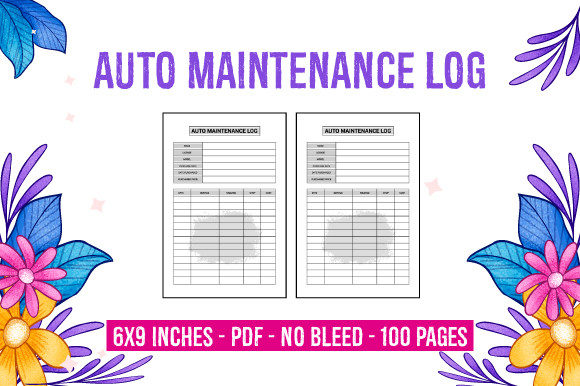
Understanding the technical parameters of these digital files is crucial for avoiding printing errors and ensuring customer satisfaction. The standard dimension for this specific auto maintenance log interior is 6″ x 9″ inches. This trim size is widely regarded as the industry gold standard for portable logbooks. It offers sufficient surface area for detailed data entry while remaining compact enough to store in a glove compartment, center console, or door pocket. Larger formats like 8.5″ x 11″ are often impractical for in-car use, while smaller pocket sizes lack the necessary space for comprehensive service notes.
The provided high-resolution PDF files address one of the most common pain points in POD publishing: bleed configuration. These interiors are available in both bleed and no-bleed variations. Selecting the correct file is mandatory before uploading to KDP. A no-bleed file keeps all content within a safe margin, ensuring that no text or lines are trimmed during the binding process. Conversely, a bleed version allows design elements to extend to the very edge of the page. Because these files are pre-validated for print resolution, they eliminate the risk of pixelation or blurry lines that often plague amateur designs created in standard word processing software. The 100-page count is also strategically chosen; it provides enough capacity for several years of average driving records without making the spine too thick for cost-effective paperback printing.
Anatomy of an Effective Vehicle Service Tracker
A generic notebook cannot compete with a specialized auto maintenance log because it lacks the structured prompts necessary for effective data capture. When evaluating or utilizing ready-made interiors, it is important to understand what makes the internal structure valuable to the end user. High-quality templates go beyond simple date and mileage columns. They facilitate a holistic view of vehicle health through categorized sections.
- Routine Service Intervals: Dedicated tables for oil changes, filter replacements, and fluid top-offs allow users to track intervals at a glance.
- Repair and Parts Documentation: Spaces for recording part numbers, vendor names, and labor costs help in warranty claims and future diagnostics.
- Tire and Battery Tracking: Specific logs for tire rotation, tread depth measurements, and battery replacement dates ensure safety components are not overlooked.
- Expense Summaries: Annual or monthly totals assist owners in calculating the true cost of ownership for tax purposes or resale valuation.
- Maintenance Checklists: Pre-printed checklists for seasonal inspections or pre-trip evaluations add significant utility over blank lined paper.
By providing this level of structural organization, the book transitions from a mere stationery item to an essential automotive tool. For the KDP publisher, this inherent utility translates to better reviews and lower return rates, as the product meets the specific expectations of buyers searching for vehicle organization solutions.
Target Audiences and Market Segmentation
While the core product remains the same, the application of an auto maintenance log varies significantly across different user demographics. Understanding these segments allows for more effective cover design and metadata optimization. The ready-to-use nature of these interiors means a single functional core can be repurposed for multiple niches simply by changing the exterior packaging.
Private Vehicle Owners: This is the broadest segment. These users seek simplicity and longevity. They value clean, uncluttered layouts that make quick entries easy after a visit to the mechanic. Covers targeting this group should emphasize reliability, organization, and long-term value.
Fleet Managers and Small Business Owners: For businesses operating delivery vans, service trucks, or company cars, maintenance logs are compliance documents. These users require rigorous detail. Marketing to this segment involves highlighting the book's ability to serve as an audit trail for expenses and maintenance schedules. Bulk purchasing potential is higher in this category.
Classic Car Collectors and Restorers: Documentation is a key component of classic car valuation. Enthusiasts in this niche view maintenance logs as provenance. They prefer interiors that allow for narrative descriptions of restoration work alongside standard service data. A vintage-styled cover paired with the standard 6x9 interior creates a premium product for this high-value audience.
Mechanics and Independent Shops: Some independent technicians provide these logs to customers as a value-add service or sell them directly. In this context, the log serves as a communication bridge between the shop and the owner, building trust through transparency.
Workflow Integration: From Digital Asset to Published Product
The efficiency of using pre-made 100-page KDP interiors lies in the separation of concerns. Instead of spending weeks mastering Adobe InDesign or Affinity Publisher, the creator focuses on the two variables that actually drive sales: the cover and the listing. The workflow begins with selecting the appropriate PDF variant based on the intended aesthetic. If the goal is a minimalist, professional look, the no-bleed option is typically safer and faster to approve. If the vision involves full-page graphics or colored tabs extending to the edge, the bleed file is necessary.
Once the interior is secured, the cover design must be calibrated to the exact page count. Since the spine width is determined by the number of pages and paper type (white vs. cream), using a confirmed 100-page interior eliminates guesswork. Creators can generate their cover template immediately, knowing the dimensions will remain static. This predictability is vital for scaling a POD business. It allows for batch creation where multiple covers are designed in a single session, each applied to the same verified interior file.
Furthermore, high-resolution PDF files ensure compatibility across different POD platforms. While Amazon KDP is the primary marketplace, these standardized dimensions and resolutions allow for diversification to other platforms like Barnes & Noble Press or Lulu without reformatting. This cross-platform capability maximizes the return on investment for the digital asset.
Enhancing User Experience Through Design Choices
Even when using standardized interiors, publishers can influence the perceived quality of the auto maintenance log through strategic choices. Paper selection plays a subtle but important role. White paper generally offers higher contrast for printed lines and tables, making it preferable for detailed logs where readability is paramount. Cream paper, while aesthetically warmer, can sometimes reduce the legibility of fine grey lines used in table structures.
Additionally, the first few pages of the book offer prime real estate for adding value. While the main 100-page block is fixed, some creators choose to add a custom title page, a "this book belongs to" section, or a quick-reference guide for common maintenance intervals specific to popular vehicle models before the main log begins. This hybrid approach combines the speed of ready-to-use files with a touch of bespoke customization that distinguishes the product from competitors using identical base templates.
Economic Viability and Scalability
The business case for utilizing ready-made auto maintenance log interiors rests on margin protection and velocity. Designing a functional, error-free interior from scratch requires either significant personal expertise or the expense of hiring a freelancer. By acquiring a licensed, ready-to-use file, the upfront cost is fixed and typically nominal compared to custom design fees. This lowers the break-even point for each title.
Moreover, the evergreen nature of vehicle maintenance ensures that these books do not become obsolete. Unlike trend-based journals tied to specific years or fads, a well-designed maintenance log is relevant regardless of the calendar year. This longevity supports compound growth in a KDP catalog. As the library of titles expands, older listings continue to generate passive revenue, creating a stable foundation for the publishing business.
Ultimately, the integration of professional, pre-formatted interiors into the POD workflow represents a maturation of the low-content publishing model. It moves the industry away from spam-like tactics toward the production of genuine utility. For the creator, it offers a reliable path to product development; for the consumer, it guarantees a functional tool that aids in the responsible ownership and maintenance of their vehicles. The synergy between high-quality digital assets and targeted niche marketing creates a sustainable ecosystem where both publisher and user derive tangible value.